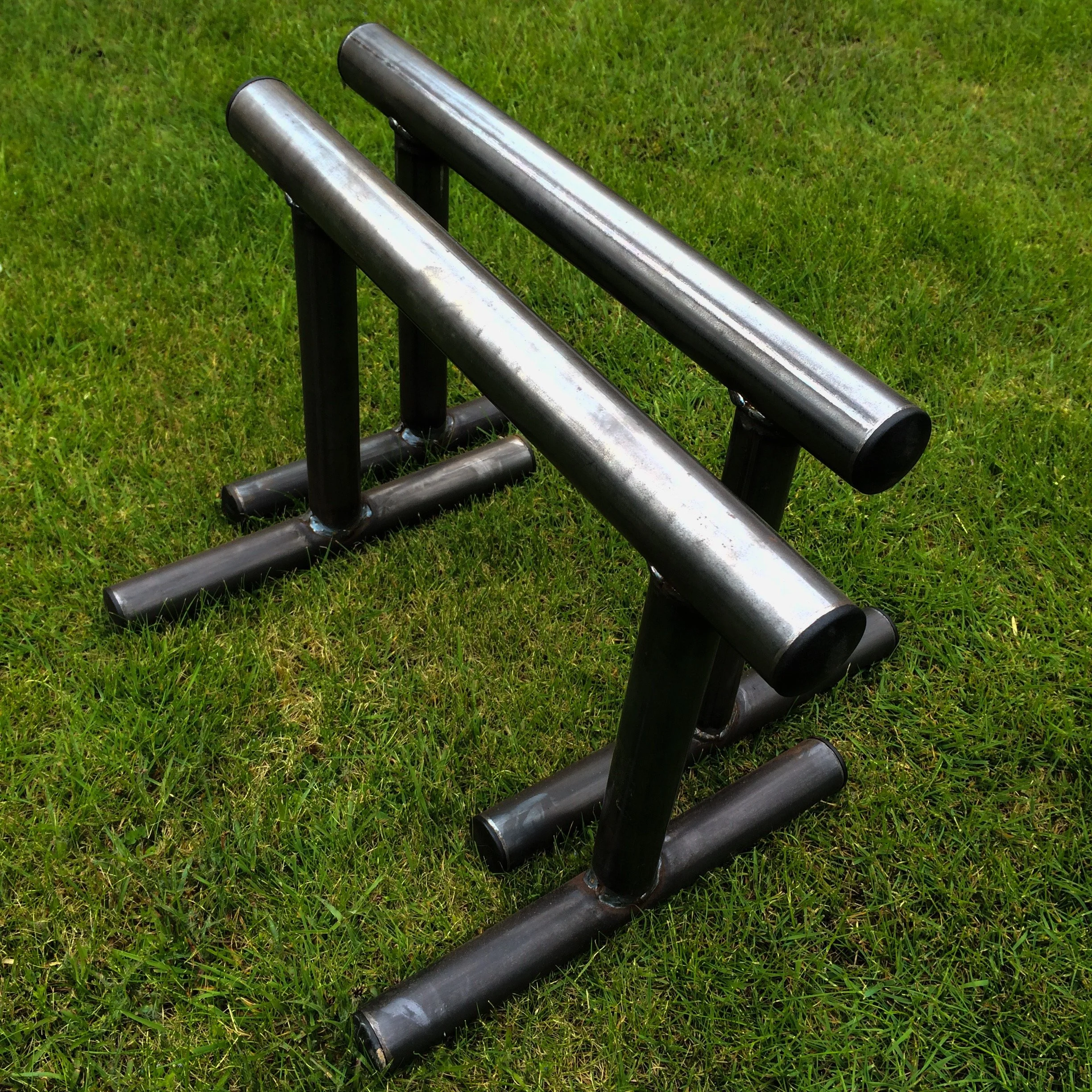
Parallettes are small, portable bars designed to support your hands during bodyweight and calisthenics exercises. They typically consist of a pair of horizontal bars raised slightly off the ground, supported by stable feet or frames.
Parallettes can be used for everything from PUSH UPS TO L SEAT’S TO HANDSTANDS TO PLANCHES. Their compact size makes them easy to use at home, in the gym or AT THE BARS.
Whether you're new to calisthenics or working towards advanced bodyweight skills, parallettes are a versatile piece of training equipment.
WHAT ARE PARALLETTES?
What are parallettes used for?
PUSH UPS
Using parallettes for push ups allows you to grip the bars, rather than have your hands on the floor, WHICH ENABLES A GREATER RANGE OF MOVEMENT WHEN PERFORMING THE EXERCISE.
DIPS
HIGHER PARALLETTES CAN BE USED FOR BENCH DIPS, PROVIDING STABLE, RAISED BARS FOR YOUR HANDS.
L SEAT
PARALLETTES ARE VITAL WHEN LEARNING TO L SEAT, IF YOU DON’T HAVE ACCESS TO DIP BARS. they provide enough height to left your body and legs clear of the floor.
HANDSTANDS
parallettes GIVE YOU SOMETHING TO GRIP WHEN HOLDING A HANDSTAND AND OFFER A DIFFERENT WRIST POSITION, HELPING YOU CONTROL THE HOLD.
PLANCHE
PROBABLY THE MOST ADVANCED MOVE, THE PLANCHE. USiNG PARALLETTES MEANS YOUR FEET AND BODY HAVE MORE CLEARANCE FROM THE FLOOR WHILE ALLOWING YOU TO KEEP A STRONG GRIP.
GENERAL CALISTHENICS
THERE ARE A WIDE RANGE OF CALISTHENICS EXERCISES THAT CAN BE PERFORMED ON PARALLETTES, MAKING THEM ONE OF THE MOST BENEFICIAL PIECES OF EQUIPMENT.
WHO CAN USE PARALLETTES?
BEGINNERS
BEgiNNERS CAN USE PARALLETTES FOR BASIC EXERCISES, SUCH AS PUSH UPS, SUPPORT HOLDS AND ASSISTED EXERCISES, WHILST DEVELOPING STRENGTH AND CONFIDENCE.
INTERMEDIATE
INTERMEDIATE CALISTHENICS ATHLETES CAN USE PARALLETTES FOR MOVEMENTS SUCH AS L SEATS, HANDSTAND TRAINING AND MORE ADVANCED PUSH UP VARIATIONS.
ADVANCED
ADVANCED ATHLETES CAN USE PARALLETTES FOR SOME OF THE MOST DIFFICULT CALISTHENICS MOVEMENTS, LIKE HANDSTAND PUSH UPS AND PLANCHES.
PARALLETTES VS
PARALLEL BARS
DESPITE HAVING A SIMILAR NAME, PARALLETTES AND PARALLEL BARS ARE TWO DIFFERENT PIECES OF EQUIPMENT.
PARALLETTES ARE SMALLER, LOWER TO THE GROUND AND DESIGNED TO BE PORTABLE. THEY’RE SUITED TO HOME TRAINING OR TAKING THEM TO YOUR PLACE OF TRAINING.
PARALLEL BARS, OFTEN CALLD DIP BARS, ARE MUCH HIGHER AND CAN BE USED TO PERFORM DIPS. THEY’RE GENERALLY MUCH BIGGER THAN PARALLETTES AND ARE NOT PORTABLE.
THINGS TO CONSIDER
PARALLETTES COME IN VARIOUS SIZES AND MATERIALS. THE RIGHT CHOICE DEPENDS ON HOW YOU INTEND TO USE THEM.
HEIGHT: low parallettes are more compact and easier to transporT, whereas high parallettes give you more clearance from the ground.
Length: longer bars can provide more room for different hand positions.
materials: wooden and metal parallettes can offer different grips. metal parallettes can be used outdoors and wooden ones are best kept inside to avoid rot or damage.
Portability: if you plan to travel with them, size and weight become very important and some of designed specifically to be transported.
Read our buyers guide for help buying the right set for you.
WHAT TYPE OF PARALLETES SHOULD YOU BUY?
READY TO TRY PARALLETTES?
OTHER FAQs
-
Yes! parallettes are great for users of all abilities and are especially useful for beginners.
-
You can perform bench dips on parallettes. for normal dips, you need much taller bars.
-
Yes, a decent set of parallettes are stable enough for handstands, handstand push ups, planches, etc.
-
this is down to personal preference. how and where you plan to use your parallettes will determine which material are best for you.
Check our buyers guide for advice.